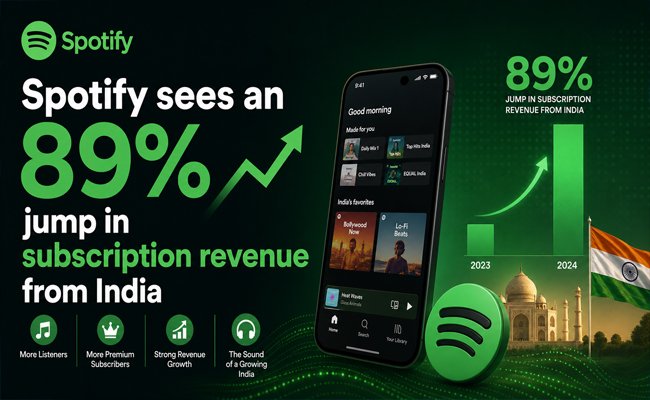
Spotify has achieved a major milestone in India by successfully converting free users into paying subscribers, despite a market long dominated by free content. India has traditionally been a free-content market, shaped by platforms like YouTube and telecom-bundled music services. When Spotify entered India in 2019, subscriptions were more theory than habit. Several rivals in this space like ByteDance’s Resso to Bharti Airtel’s Wynk eventually bowed out, unable to square high content costs with low willingness to pay.
Spotify, however, took a different approach that gradually nudges users toward paid plans instead of forcing them. Spotify’s India business saw strong financial growth, with its revenue growing 60% to ₹514 crore. Its subscription revenue jumped 89% to ₹317 crore.
Notably, this turnaround came without any major price hikes for most of the year, suggesting that the gains were as much about smarter design and tighter costs as about newfound consumer generosity.
The strategy was less about chasing users with freebies and more about keeping them. Spotify leaned on personalised playlists, recommendation algorithms and localised discovery—nudging listeners from casual sampling to habit. Unlike telecom-bundled rivals, it focused on building a direct relationship with users, improving the odds that some would eventually upgrade to paid tiers.
The next act is however about extracting more from that shift. In August 2025, Spotify rolled out its first price increase in India and introduced tiered plans ranging from ₹139 to ₹299, placing premium features such as better audio quality and AI-driven discovery behind higher paywalls. The aim is clear: raise revenue per user without scaring them back to free.