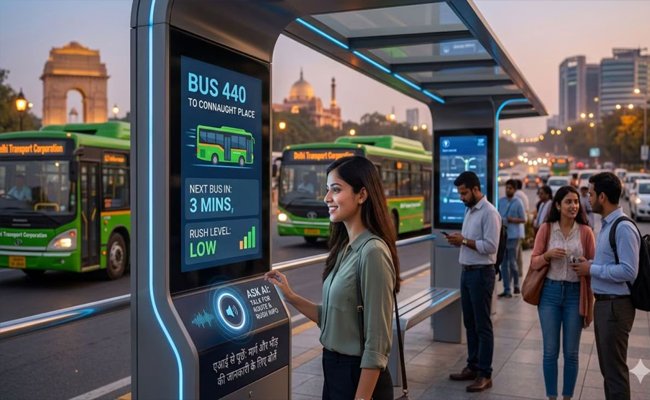
The initiative aims to provide real-time bus information at stops, reduce commuter confusion, and enhance public transport efficiency, with a pilot rollout planned at select locations across the national capital.
The Delhi Transport Department is preparing to introduce AI-enabled bus shelters across the city to improve the daily travel experience for commuters. The proposed smart shelters will provide real-time updates on bus routes, frequency, and expected waiting times, helping passengers make more informed travel decisions.
Officials said the system will also enable the Delhi Transport Corporation (DTC) to track daily ridership patterns, including data on male and female passengers. This data-driven approach is expected to support better planning and management of public transport services.
Real-time updates to reduce commuter confusion
The AI-powered shelters will allow commuters to access key travel information at the push of a button, addressing one of the most common challenges faced at bus stops—lack of reliable information. Currently, many passengers rely on fellow commuters or bus conductors for route details, often leading to confusion and errors.
“The key aim behind this project is to enhance the passenger experience. At present, for any details about bus routes, people often rely on other passengers at the bus stop or on conductors,” a senior official said.
In several instances, passengers end up boarding the wrong bus due to unclear or unavailable information. The new system is expected to significantly reduce such incidents by offering accurate, real-time updates directly at bus stops.
Pilot rollout planned across key locations
The project will initially be launched as a pilot at 10 locations, likely including areas around New Delhi and the High Court. Based on the success of the pilot phase, authorities plan to expand the rollout across the national capital.
Officials believe the move will mark a step forward in modernising Delhi’s public transport infrastructure, making it more accessible, efficient, and commuter-friendly through the use of AI-driven solutions.