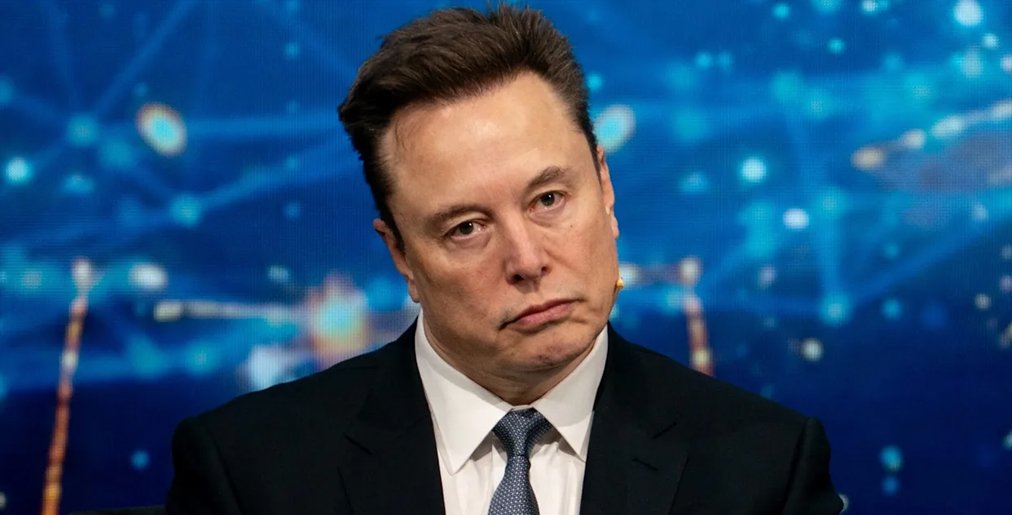
French police on Tuesday raided the offices of X in Paris and ordered its owner Elon Musk to appear for questioning, as European authorities intensify scrutiny of the social media platform and its artificial intelligence tools.
The raid was carried out by the Paris public prosecutor’s cybercrime unit as part of a year-long investigation into suspected abuse of algorithms and fraudulent data extraction allegedly involving X or some of its executives. Prosecutors said the inquiry had now been broadened following fresh complaints related to the functioning of X’s AI chatbot, Grok.
Musk and former X chief executive Linda Yaccarino have been summoned to a hearing scheduled for April 20, while several other X employees were also called as witnesses. Attendance at such hearings is mandatory under French law, though enforcement can be more complex when those summoned reside outside the country.
X criticised the move, accusing French authorities of bypassing established legal processes. “The Paris Public Prosecutor’s Office is plainly attempting to exert pressure on X’s senior management in the United States by targeting our French entity and employees, who are not the focus of this investigation,” the company said in a statement. It added that prosecutors had ignored international procedures designed to obtain evidence while respecting the company’s right to defend itself.
The raid was carried out by the Paris public prosecutor’s cybercrime unit as part of a year-long investigation into suspected abuse of algorithms and fraudulent data extraction allegedly involving X or some of its executives. Prosecutors said the inquiry had now been broadened following fresh complaints related to the functioning of X’s AI chatbot, Grok.
Musk and former X chief executive Linda Yaccarino have been summoned to a hearing scheduled for April 20, while several other X employees were also called as witnesses. Attendance at such hearings is mandatory under French law, though enforcement can be more complex when those summoned reside outside the country.
X criticised the move, accusing French authorities of bypassing established legal processes. “The Paris Public Prosecutor’s Office is plainly attempting to exert pressure on X’s senior management in the United States by targeting our French entity and employees, who are not the focus of this investigation,” the company said in a statement. It added that prosecutors had ignored international procedures designed to obtain evidence while respecting the company’s right to defend itself.

Musk echoed those concerns in a post on X, describing the raid as “a political attack.” He had previously rejected the original allegations in July, calling the investigation politically motivated.
Probe Expanded to Include Sexually Explicit Deepfakes
In a statement, the Paris prosecutor’s office said the scope of the investigation had been expanded to include allegations of complicity in the “detention and diffusion” of child-pornographic material, as well as violations of image rights through the creation and distribution of sexually explicit deepfakes. Authorities are also examining whether X’s algorithms contributed to the circulation of such content.
The prosecutor’s office said the investigation was being conducted in a “constructive approach” aimed at ensuring the platform complies with French law while operating in the country. Following the April hearing, authorities may decide to drop the case, pursue further investigative steps, or place suspects under formal investigation, which could include custodial measures.
The French probe is being led by the Paris prosecutor’s cybercrime unit in cooperation with French police and Europol. The same unit previously arrested Telegram founder Pavel Durov in 2024 on charges including alleged complicity in organised crime facilitated through the messaging app — accusations his lawyer has described as unfounded.
The investigation was initially triggered by a complaint from French lawmaker Eric Bothorel, who alleged that biased algorithms on X may have distorted automated data processing systems. “Glad to see that my complaint from January 2025 is yielding results,” Bothorel said in a post on X. “In Europe, and particularly in France, the rule of law means that no one is above the law.”
Parallel Investigations in Britain and the EU
The French action comes as regulators across Europe step up oversight of X and its AI operations. Britain’s Information Commissioner’s Office said it had opened a formal investigation into Grok over concerns related to the processing of personal data and reports that the chatbot had been used to generate non-consensual sexual images, including of children.
Separately, Britain’s media regulator Ofcom said it was outlining the next steps in its own investigation into X, launched last month. Ofcom is examining whether the company has taken sufficient measures to mitigate the risk of sexually explicit deepfakes spreading on the platform. The regulator clarified, however, that it is not investigating xAI, which operates Grok, as it currently falls outside the scope of its statutory powers.
At the European Union level, authorities last week launched a separate probe into X to assess whether the platform has breached EU rules by disseminating illegal content. The investigation follows public backlash over the circulation of manipulated sexualised images generated using Grok.
Together, the actions mark a widening regulatory response to concerns over AI-generated content, algorithmic transparency and platform accountability, with X increasingly at the centre of Europe’s efforts to rein in Big Tech under stricter digital and data protection laws.